
Design and photography have always been labour-intensive. Yet for those in the sector, AI is shaping new workflows to enhance productivity.
Imagining design jobs of the future, you may immediately think of text-to-screen prompts that immediately visualise your wildest creative concepts. Messing with ideas, changing colours and moods is performed for you at the uttering of a mere sentence. Yet this isn’t the design landscape of the future; it is the present. Artificial intelligence is redefining creative workflows, making the impossible possible. Yet with this comes risk, which you must balance to remain relevant.
Increasing Productivity With AI Team Management
While these lofty concepts are exciting, AI is currently having the most impact at ground level. One of its key plus points is its ability to overhaul mundane tasks, helping manage teams and streamline workflows. Menial tasks take up an average of three to four hours a day for businesses, and cost a medium-sized operation around $2,625,000 in salary and lost production. Imagine wanting to get on with a creative project, but instead having to spend days doing payroll, marketing, invoicing and other tasks. AI can do this for you, leaving you and your staff to do what they do best: Design and photograph.
There are numerous software suites set up for this, each with varying levels of AI integration. One perfect example can be found with Factorial, who provide PTO management software that can help record sick days, absences and time off. All this can be done remotely. It uses AI to help record and analyse patterns, while handing ownership to your staff so they can record their own time through the app. When combined with its many other facets, such as rota planning and analytics, you can seriously cut down the time spent on admin tasks in your photography and design business.
This is not just something that can benefit companies either. By using AI-enabled software, freelancers and small businesses can manage their everyday finances. They can automate income, expenditure, invoicing and taxes, often from one handy platform. The key here is finding one like Factorial with varied pricing plans, ranging from startup to large business suites, if your company plans on growing.
The Rapidly Evolving World of AI Editing Tools
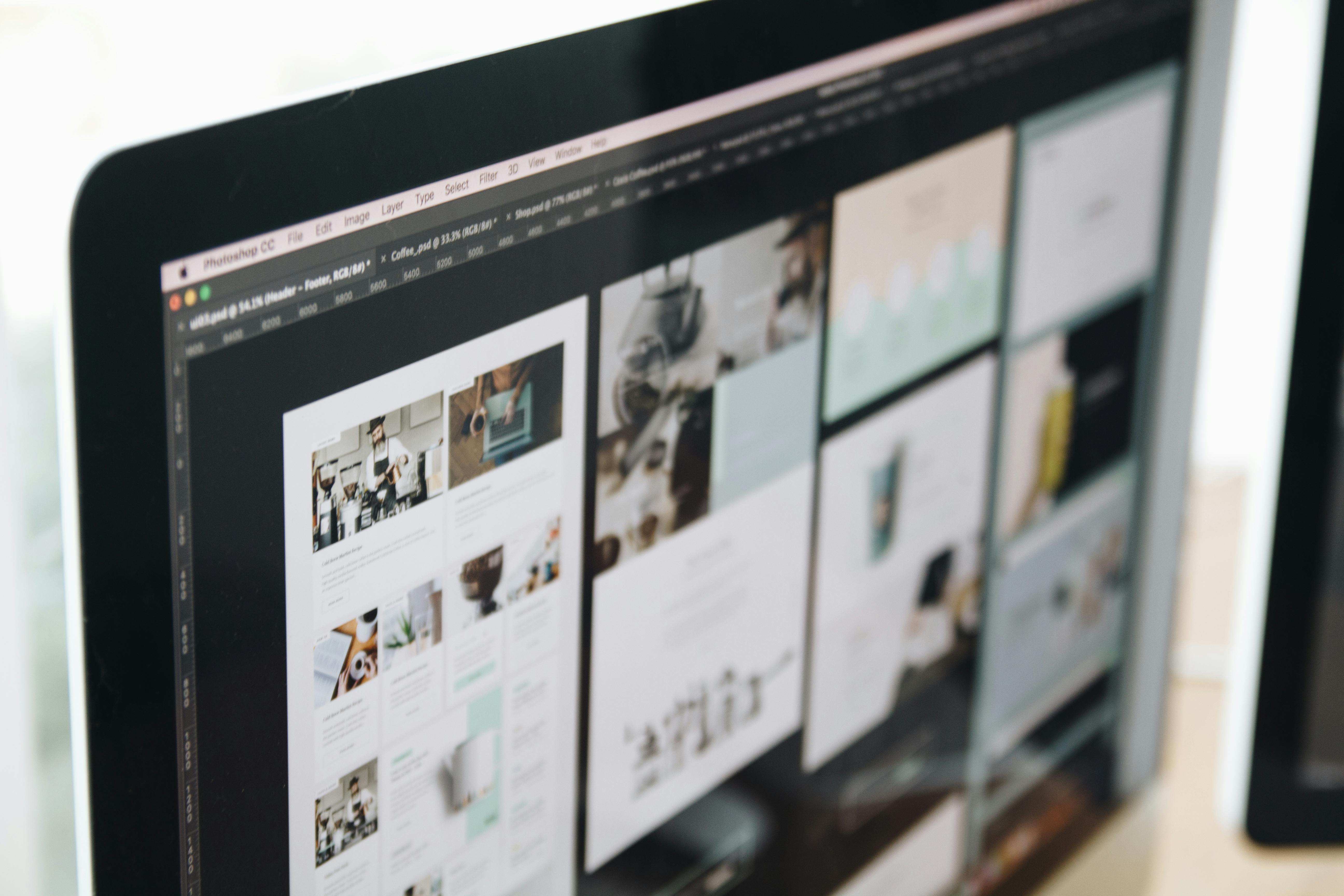
The next place AI can help is actually in your creative workflow, and editing tools are the key place. In fact, they can actually improve it by detecting patterns you may overlook. By using pre-existing algorithms, this can be done quickly and effectively.
Generally, AI editing tools can be broken down into several different areas. You may even have been using them for some time without even realizing. These include adjustment tools, which can fix exposure, contrast and balance. Secondly, there are the ones that can even help with creative changes, such as the removal of objects or backgrounds. In some cases, they may even be able to provide help and advice while the photograph is being placed.
Another way it can help behind the scenes with editing is with selection. AI can cut through a wide range of pictures and pick out the best one. This is particularly useful for those shooting events, who may rack up thousands of pictures. By letting AI learn your personal style, it can detect which ones will be preferable to you.
The benefits of this are numerous. Firstly, they improve speed and efficiency, vital if you are a solo freelancer or working within a large team. It also provides consistency, if that is your goal, allowing work by multiple people to achieve the same uniform results. It also increases accessibility, allowing those who have not mastered advanced techniques and software to achieve a high-quality level of output.
Grasping Generative AI in Design
Generative AI is a specific type of artificial intelligence. Instead of automating tasks, its goal is to create content. It looks at a vast amount of data, such as text, audio, images and code, then creates based on the prompts it is given.
Generative AI has already entered the workflow of creative professionals. A recent survey by AIPRM found that almost half of all artists (45.7%) found text-to-image technology useful in their artistic process. Around a third (31.5%) found it somewhat useful. Around one in ten (11.2%) had used it to create something that resembled a fully digital work.
Adobe cites one of the greatest tools for generative AI, alongside improving efficiency and accessibility, as a brainstorming tool. It says that you can quickly conjure up new ideas and concepts, which can then be worked upon. This allows artists to try out wild and wacky ideas, visualizing how they work with an AI prompt before they are put into production.
Fuelling the use of generative AI can have unintended consequences in itself, though. Design firm Arup, based in London, transferred $25.6 million transaction to a fraudulent account. The person who conducted it had just attended a call with the CFO and other members. However, it was a deepfake made using generative AI. This brings up a range of ethical questions.
Ethical Debates Rage On
Last month, 6,000 artists signed an open letter calling for Christie’s Auction House in New York to cancel an auction of thirty-four pieces. Each had been created using artificial intelligence and was named the ‘Augmented Intelligence’ collection.
The pieces covered a wide range of types and genres. It included both physical and digital-only artworks in the form of NFT tokens. Some even had a performance aspect, such as a piece that was to be named by AI at the end of the sale. It included work by early pioneers into AI art and modern, contemporary artists.
In the open letter, the objectors claimed that “AI models that are known to be trained on copyrighted work without a license”. They then added that “these models, and the companies behind them, exploit human artists, using their work without permission or payment to build commercial AI products that compete with them. Christie’s support of these models, and the people who use them, rewards and further incentivizes AI companies’ mass theft of human artists’ work.”
This is a complex issue, and one that impacts photography, design, and the whole arts spectrum. These AI tools use already available works, and do not credit or pay the artist for their use. Yet they compete directly, and could put artists out of business. Without them, what new sources will AI have to create with?
Added to that is the concept of art itself. It is more than an image or sculpture. It is reflective of human ideals, the push to new and higher ways of interpreting the world. With little experience of this, can AI ever compete?
Integrating AI Tools Into Your Workflow
Taking these ethical viewpoints into mind is important because there is a very credible threat, in that you may come to rely on AI far too much. Getting the balance as you integrate it into your workflow is the key, allowing it to free up the mundane tasks while you focus on the creativity.
Let AI take up the bulk of the mundane, time-consuming and day-to-day tasks. Yet never let it take responsibility: Always check the final product and make sure you refine it. This keeps your personal touch. A perfect example of how wrong this can occur in May 2025, when the Chicago Sun-Times and Philadelphia Enquirer released their summer reading lists. They featured real authors, but contained books by them that didn’t exist. Don’t be that company.
You should also be extremely open about your use of AI. If clients ask you, then explain the process and where it was used. Even if you are just using it to do backroom work like payroll and marketing, inform them you only use it in HR. You should always keep improving your manual editing skills, or you will lose them.
Lastly, allow the AI to mimic your style. At first, this will be hard as you will have to instruct it, almost like training a staff member. Over time, it will come to know what you prefer, making the workflow much easier.
Balancing the Risk vs Reward
There is no advantage to ignoring the elephant in the room: AI has the power to replace both photographers and graphics designers, and those working in the sector. In the creative industries, around 21% of freelancers have noticed a decrease in their work. The World Economic Forum has also stated that graphic design alone sits 11th in the fastest declining job sector based on employee predictions.
By using these products, we are also training them. This becomes a scenario of ‘give them enough rope’. The more we use it, the better it becomes, and the more replaceable those working in our sector become.
Yet AI has some major advantages. It can free us up from the burden of mundane tasks, allowing us to be truly creative. With no more admin, no more fruitless paperwork and number crunching, we can be free. Instead of killing photography and graphic design, this could be a golden age with fewer people working, but higher productivity for those who do.
